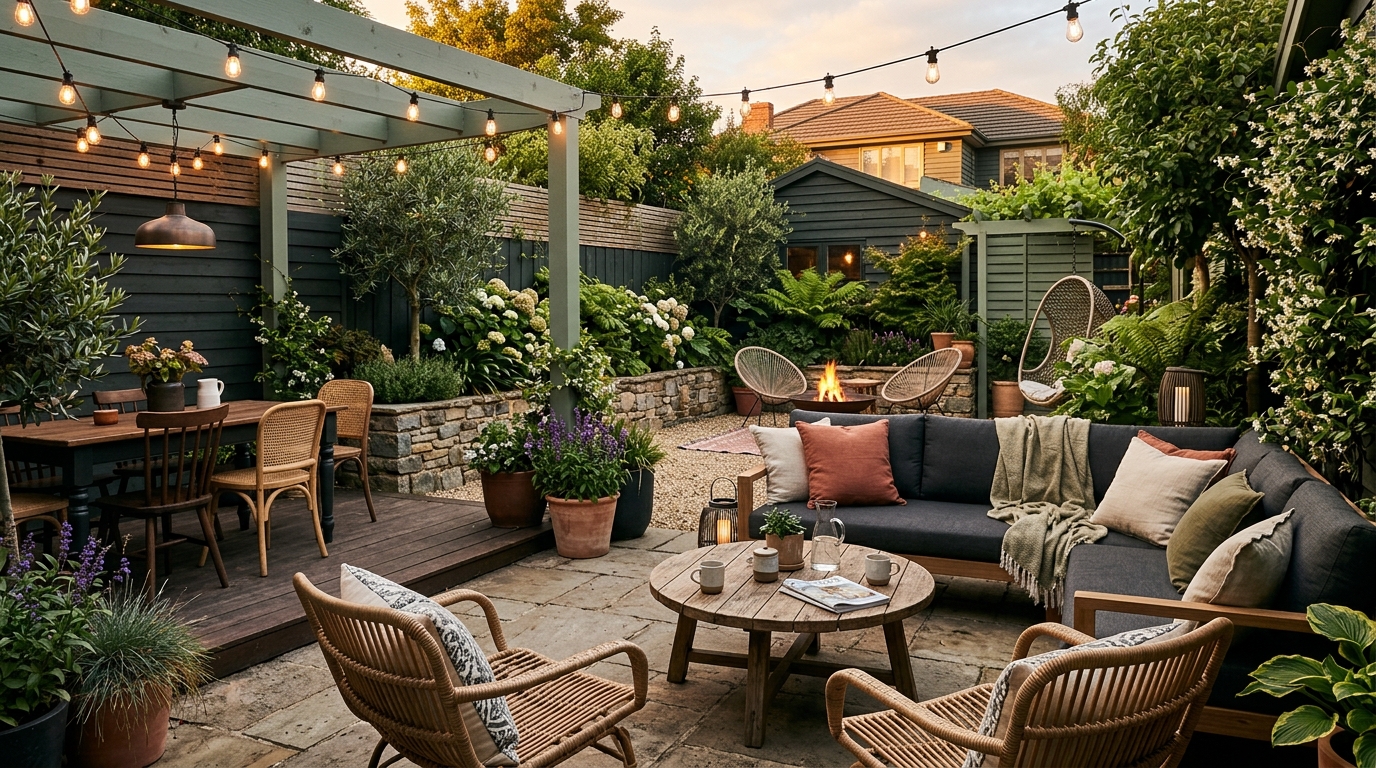
A fire pit extends your outdoor season, creates a natural gathering point, and adds warmth and ambiance that no other patio feature can match. But with so many types, sizes, and fuel options, choosing the right one can feel overwhelming. This guide breaks it down.
Fuel Types: Pros and Cons
Propane Fire Pits
Propane fire pits are the most popular choice for good reason. They light instantly, produce consistent heat, and produce no smoke or ash. A standard 20-pound propane tank hidden inside the base provides 8–12 hours of burn time. The downside: you need to refill or exchange tanks, and propane costs more per BTU than natural gas or wood.
Best for: Patios where you want instant ambiance without smoke, and where running a gas line isn't practical.
Natural Gas Fire Pits
Natural gas fire pits connect to your home's gas line, so you never run out of fuel. They produce the same clean, smokeless flame as propane but at a lower ongoing cost. The catch: installation requires a gas line run to your patio, which means a plumber and a permit. It's a higher upfront investment that pays off over years.
Best for: New patio construction or major renovations where a gas line can be trenched in.
Wood-Burning Fire Pits
Wood fire pits offer the authentic crackle, smell, and glow that gas can't replicate. They're the least expensive option and work anywhere. But they produce smoke (which can bother neighbors), require firewood storage, and leave ash to clean up. Many municipalities also restrict open burning — check local fire codes before buying.
Best for: Rural properties, large yards, and people who love the ritual of building a fire.
Smokeless Fire Pits
Smokeless fire pits use a double-wall design that reburns combustion gases, reducing smoke by up to 80%. They still burn wood but produce far less smoke and ash. They're more expensive than basic wood bowls but offer a cleaner experience.
Best for: Suburban yards where smoke would be a problem but you still want a real wood fire.
Fire Pit Tables vs. Fire Bowls
Fire pit tables combine a fire feature with a surface for drinks and plates. They're typically 36–42 inches wide and 18–24 inches tall, making them a natural centerpiece for a seating group. Most have a lid that covers the burner when not in use, turning the table into a full surface.
Fire bowls are lower, wider, and more traditional. They range from 24–36 inches in diameter and sit closer to the ground. They're less expensive and create a more campfire-like atmosphere, but you lose the table surface.
Sizing for Your Space
A fire pit should be proportional to your seating area. As a rule of thumb, allow 36–48 inches between the fire pit edge and any seating. For a standard 4-chair conversation set, a 36-inch fire pit table works well. For larger sectionals, look at 42-inch models. On small patios, a 22-inch smokeless fire pit or a tabletop patio heater is more appropriate.
Safety Considerations
- Place fire pits on a non-combustible surface (stone, concrete, brick). Never on wood decking.
- Maintain at least 10 feet of clearance from structures, overhanging branches, and awnings.
- Keep a fire extinguisher or water source within reach.
- Never leave a fire unattended, especially with children or pets nearby.
- For gas fire pits, have the connection checked annually for leaks.
Heat Output
Gas fire pits are rated in BTU (British Thermal Units). For a comfortable warming radius of 6–8 feet, look for 40,000–50,000 BTU output. Tabletop models produce 10,000–15,000 BTU, which is enough for close-range warmth but won't heat a large seating area. Wood fire pits don't have BTU ratings, but a 30-inch bowl produces roughly the same heat as a 50,000 BTU gas pit.
The right fire pit depends on your space, your fuel access, and how you want to use it. For most suburban patios, a propane fire pit table hits the sweet spot of convenience, heat, and ambiance. For larger rural properties, a wood-burning or smokeless fire pit delivers the authentic experience. Whatever you choose, it will change how you use your outdoor space — and extend your season by months.