The frame material is the single most important factor in how long your outdoor furniture lasts and how much maintenance it needs. A beautiful sofa that rusts after one season isn't a bargain. Here's what you need to know about the five most common outdoor furniture materials.
Teak
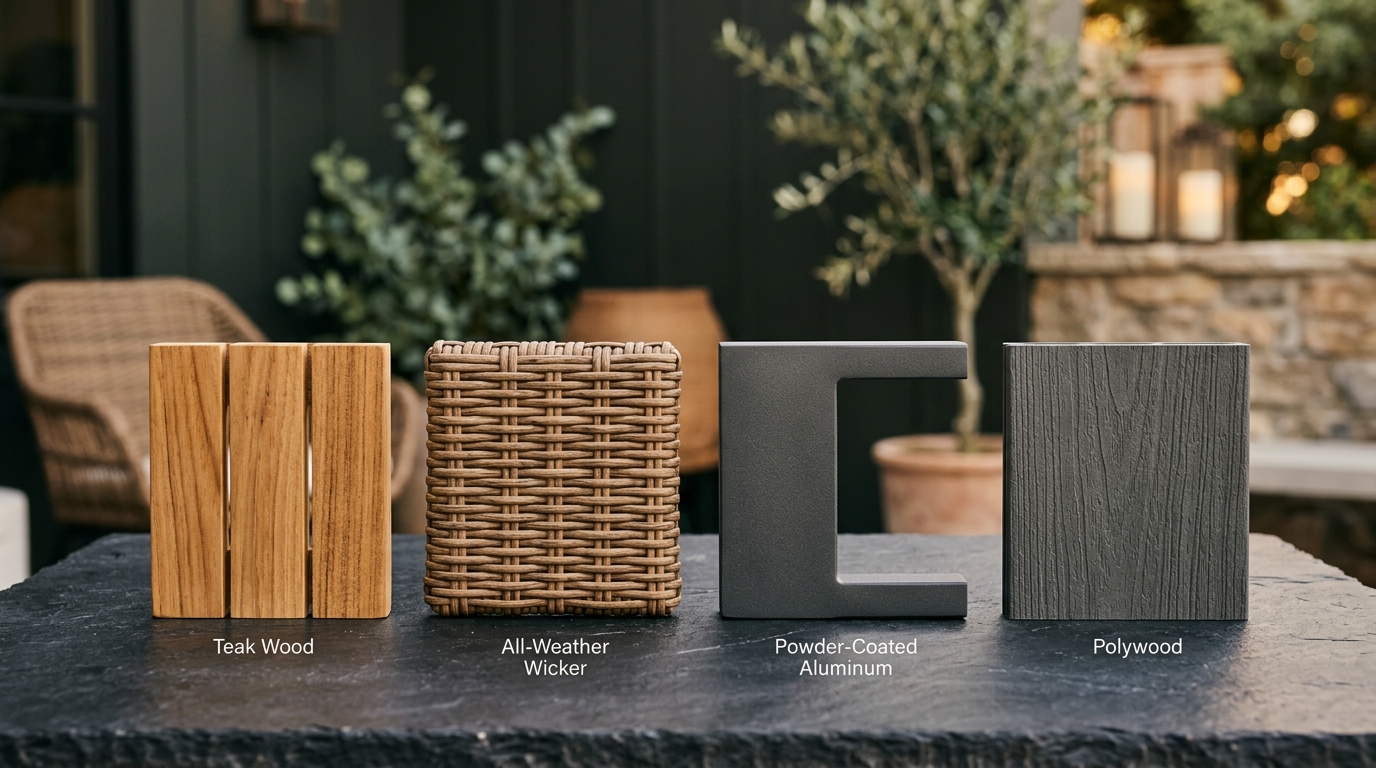
Teak is the gold standard for outdoor wood furniture. It contains natural oils that make it inherently resistant to water, rot, and insects — no sealant required. Grade A teak (from the heartwood of mature trees) is the most durable; lower grades from younger trees have less oil and won't last as long.
Durability: 25–50 years with minimal care. Teak weathers to a silver-gray patina over 6–12 months. This is natural and doesn't affect structural integrity.
Maintenance: Low. Clean with mild soap and water. Apply teak oil once or twice a year if you want to maintain the original golden color, or let it weather naturally for zero maintenance.
Best climate: Coastal, humid, and wet regions where other woods rot quickly.
Drawback: Teak is the most expensive outdoor furniture material. It's also heavy, which is good for wind resistance but makes rearranging difficult.
Aluminum
Aluminum is the most practical choice for outdoor furniture. It's lightweight, rust-proof, and available in a wide range of styles and finishes. Powder-coated aluminum has a baked-on paint finish that resists scratching, fading, and corrosion.
Durability: 15–30 years. The frame itself won't rust, but powder coating can chip if dragged or impacted. Touch-up paint prevents exposed metal from oxidizing.
Maintenance: Very low. Wipe with soap and water. Avoid abrasive cleaners that can scratch the finish.
Best climate: Rainy and coastal areas where steel would rust. Also good for windy areas if the pieces are anchored or heavy enough.
Drawback: Lightweight aluminum can blow around in strong winds. Look for heavier-gauge frames or add weight to the base.
All-Weather Wicker
Modern outdoor wicker is not natural rattan — it's synthetic resin (usually HDPE or polyethylene) woven over an aluminum or steel frame. It looks like natural wicker but won't rot, fade, or crack in the sun. The quality of the resin and the tightness of the weave determine how long it lasts.
Durability: 10–20 years for HDPE wicker. Cheaper PVC wicker may become brittle after 3–5 years of sun exposure.
Maintenance: Low. Hose off dust and pollen. Clean spills with mild soap. Vacuum crevices occasionally.
Best climate: Covered and semi-covered patios. Performs well in all climates but lasts longest when protected from direct sun and rain.
Drawback: Cushions are essential — wicker frames aren't comfortable to sit on directly. Budget for quality cushions and storage.
Polywood (HDPE Lumber)
Polywood is recycled high-density polyethylene shaped to look like painted wood lumber. It won't rot, crack, splinter, or fade — even in full sun. It's heavier than aluminum but lighter than teak, and it's impervious to moisture and insects.
Durability: 20+ years. The color is solid throughout, so scratches don't show a different color underneath.
Maintenance: Essentially zero. Wash with soap and water. That's it.
Best climate: Full-sun exposure, poolside (chlorine-resistant), and humid climates.
Drawback: Polywood has a plastic feel that some people dislike. It's also heavy, which is good for wind but makes moving pieces harder.
Wrought Iron
Wrought iron is the heaviest and most traditional outdoor furniture material. It's virtually indestructible and wind-proof — a wrought iron chair won't budge in a storm. Modern wrought iron is usually powder-coated for rust resistance.
Durability: 30+ years if the finish is maintained. Without maintenance, iron will rust, especially in coastal or humid areas.
Maintenance: Moderate. Inspect annually for rust spots. Sand and touch up with rust-inhibiting paint. Apply a clear wax coating every 2–3 years for extra protection.
Best climate: Windy areas where lighter furniture blows away. Not ideal for coastal areas unless you're committed to rust prevention.
Drawback: Heavy and hard to move. Iron conducts heat — chairs left in the sun will be too hot to sit on. Cushions are essential.
Quick Comparison
| Material | Lifespan | Maintenance | Price |
|---|---|---|---|
| Teak | 25–50 yrs | Low | High |
| Aluminum | 15–30 yrs | Very Low | Medium |
| All-Weather Wicker | 10–20 yrs | Low | Medium |
| Polywood | 20+ yrs | None | Medium |
| Wrought Iron | 30+ yrs | Moderate | Medium-High |
There's no single best material — only the best material for your situation. If you want zero maintenance and full-sun durability, polywood is hard to beat. For timeless elegance and natural aging, teak is worth the investment. For lightweight practicality, aluminum is the workhorse. Choose based on your climate, your maintenance tolerance, and how long you plan to keep the furniture.