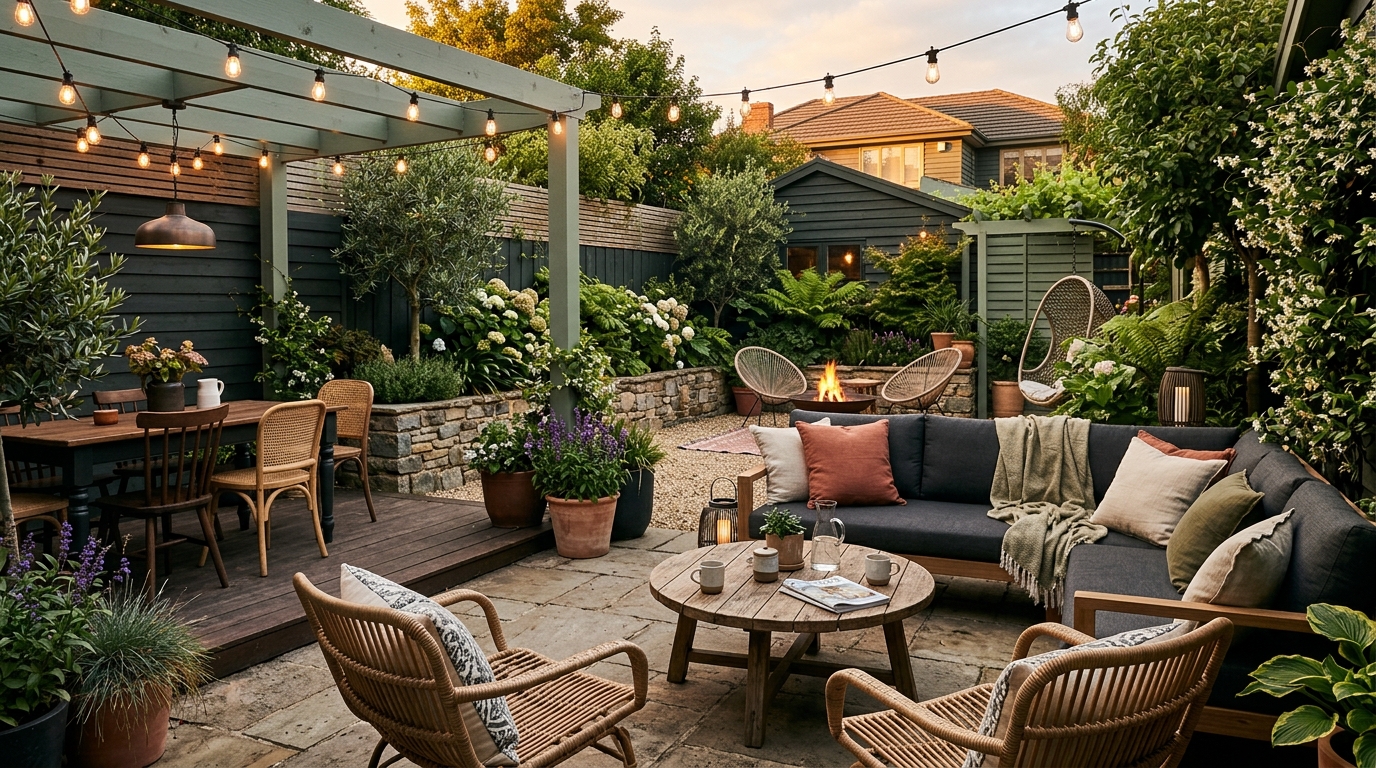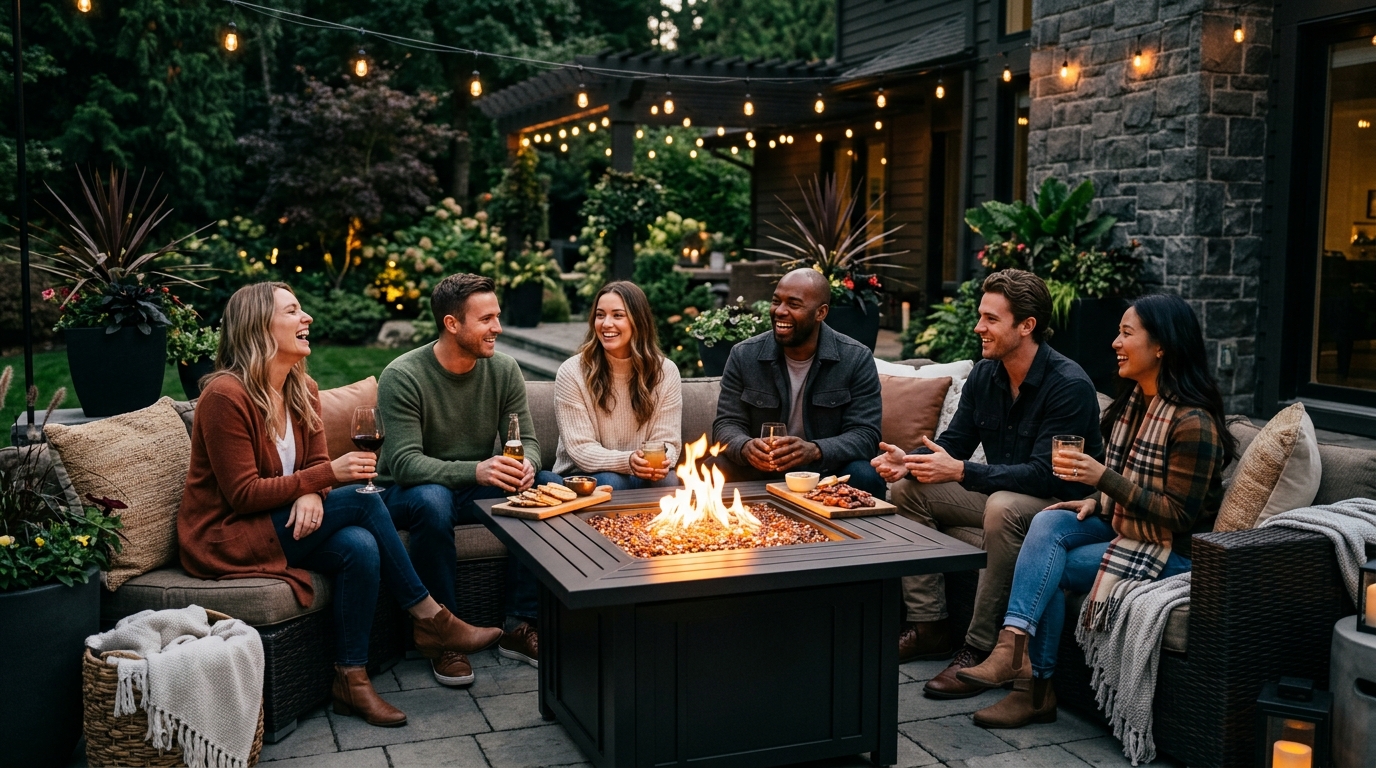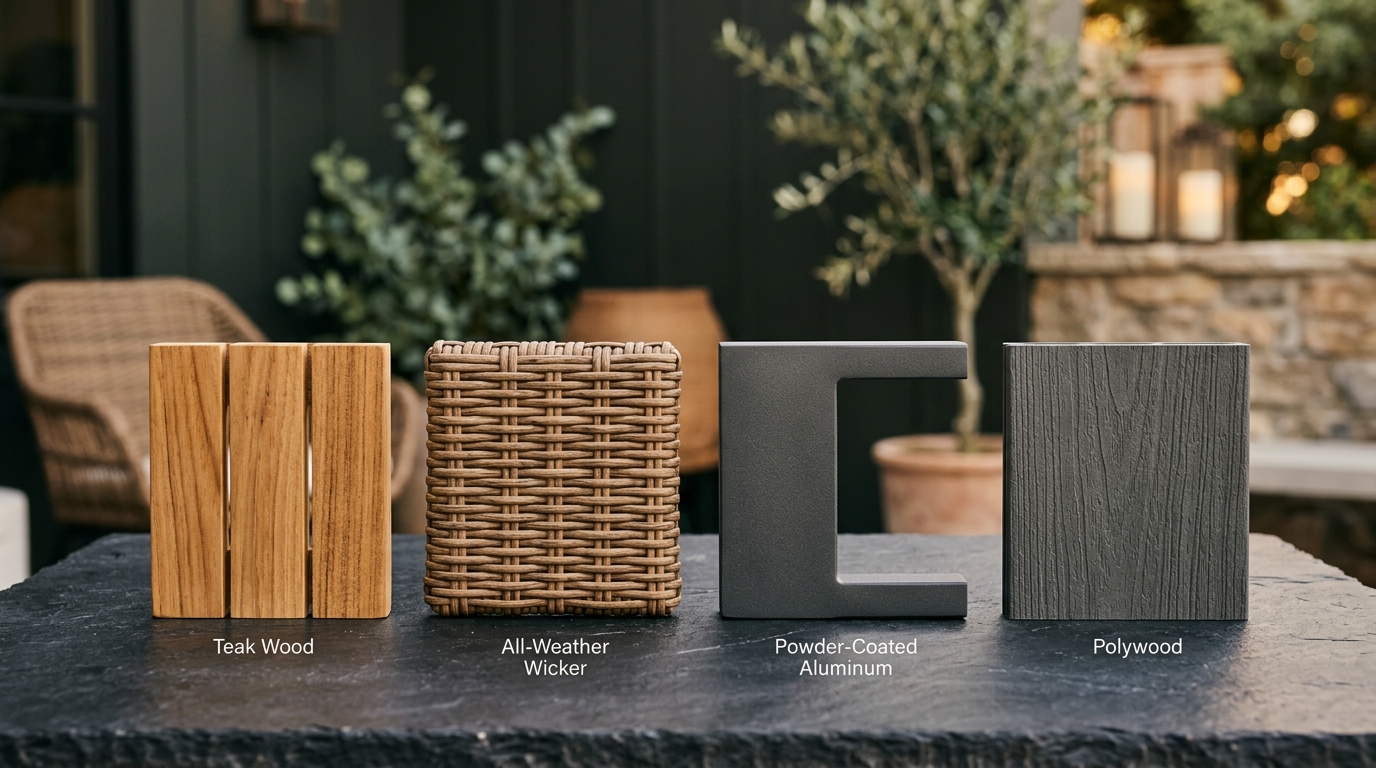
A small patio or balcony isn't a limitation — it's a design challenge. With the right furniture choices and layout strategy, even a 6×8 foot balcony can become your favorite spot to sit. Here's how to make small outdoor spaces work hard.
Measure First, Buy Second
This sounds obvious, but it's the step most people skip. Measure your space in both directions, then subtract 18 inches from each side for clearance. That's your usable furniture footprint. A 6×8 balcony has a 3×5 usable area — which means a standard dining set won't fit, but a 31-inch bistro set will.
Also measure vertical space. Wall-mounted umbrellas, hanging planters, and shelf-style plant stands use space that would otherwise be wasted.
Choose Multi-Purpose Pieces
In a small space, every piece should earn its keep. Look for furniture that serves more than one function:
- Storage benches: A 48-inch resin storage bench seats two people and stores cushions, grill supplies, or garden tools inside.
- Folding tables: Wall-mounted or folding bistro tables fold flat when not in use, freeing up floor space.
- Nesting tables: A set of 2–3 nesting side tables gives you surface area when you need it and stacks into the footprint of one table when you don't.
- Ottomans with storage: An outdoor ottoman works as a footrest, extra seating, and a place to stash throws or cushions.
Go Vertical
When floor space is limited, use walls and railings. Wall-mounted patio umbrellas provide shade without taking up floor space. Railing planters add greenery without sacrificing table surface. Hanging egg chairs take up less floor area than a lounge chair and add visual interest.
Pick the Right Scale
Small spaces need small furniture. Look for pieces specifically designed for compact areas:
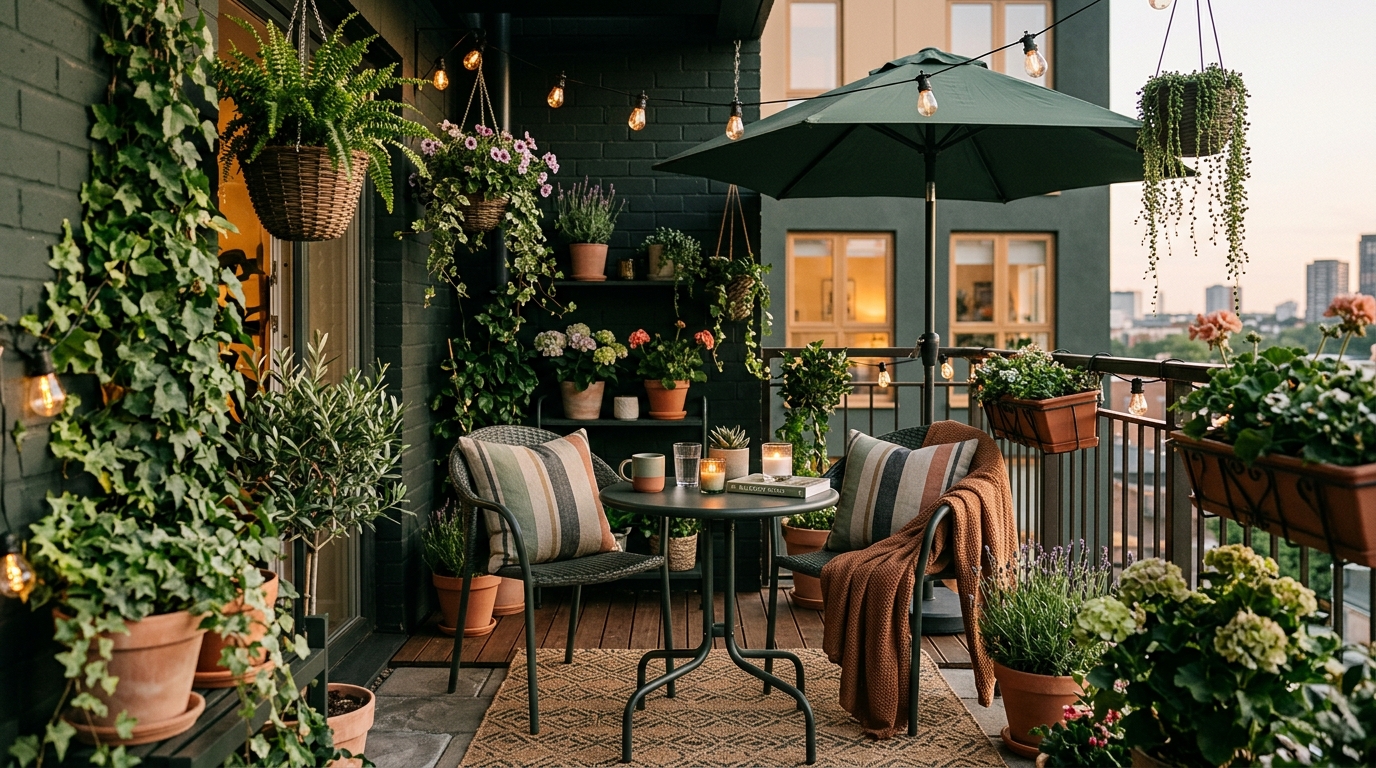
- Bistro sets: A 31-inch round table with two chairs is the classic small-space solution. Wrought iron and aluminum versions are lightweight enough to move around.
- Apartment-size sectionals: Some modular sectionals come in compact configurations (2-seat + ottoman) that fit in 5×5 foot areas.
- Folding chairs: Keep two folding chairs on hand for guests. They store flat against a wall or in a closet when not needed.
- Bar-height tables: A tall, narrow bar table takes up less floor space than a dining table and creates a different visual dynamic.
Use Color to Create Depth
Light-colored furniture and cushions make a small space feel larger. Dark pieces in a small area can feel heavy and claustrophobic. If you love dark furniture, balance it with light-colored cushions, a light rug, or bright planters.
Create Zones With Rugs and Planters
Even in a small space, a single outdoor rug defines the seating area and makes it feel intentional rather than cramped. A row of tall planters along one edge creates a natural privacy screen and draws the eye upward, making the space feel taller.
Don't Overcrowd
The biggest mistake in small patio design is trying to fit too much. A bistro set, one plant, and a string of lights is a complete, inviting space. Adding a grill, a storage box, a lounger, and three more plants turns it into a storage unit. Edit ruthlessly — if you don't use it weekly, it doesn't belong in a small patio.
Lighting Matters More in Small Spaces
String lights overhead, a lantern on the table, and a solar path light by the door transform a small patio at night. Good lighting makes the space feel designed and intentional, not like an afterthought. It also extends your usable hours well past sunset.
A small patio done well beats a large patio done poorly. Choose the right scale, go vertical, keep it edited, and your compact outdoor space will be the spot you gravitate to every evening.