Your patio is more than just the space behind your house — it's an extension of your living area, a place to eat, relax, and gather. But a patio that gets used looks very different from one that doesn't. The difference usually comes down to design choices made early on.
Start With How You Actually Use the Space
Before buying anything, think honestly about how you spend time outdoors. Do you grill every weekend? Host dinner parties? Read alone with a coffee? The answer determines what your patio needs. A family that eats outside nightly needs a durable dining set with enough chairs. Someone who unwinds with a book needs comfortable lounge seating and shade.
Map Out Zones
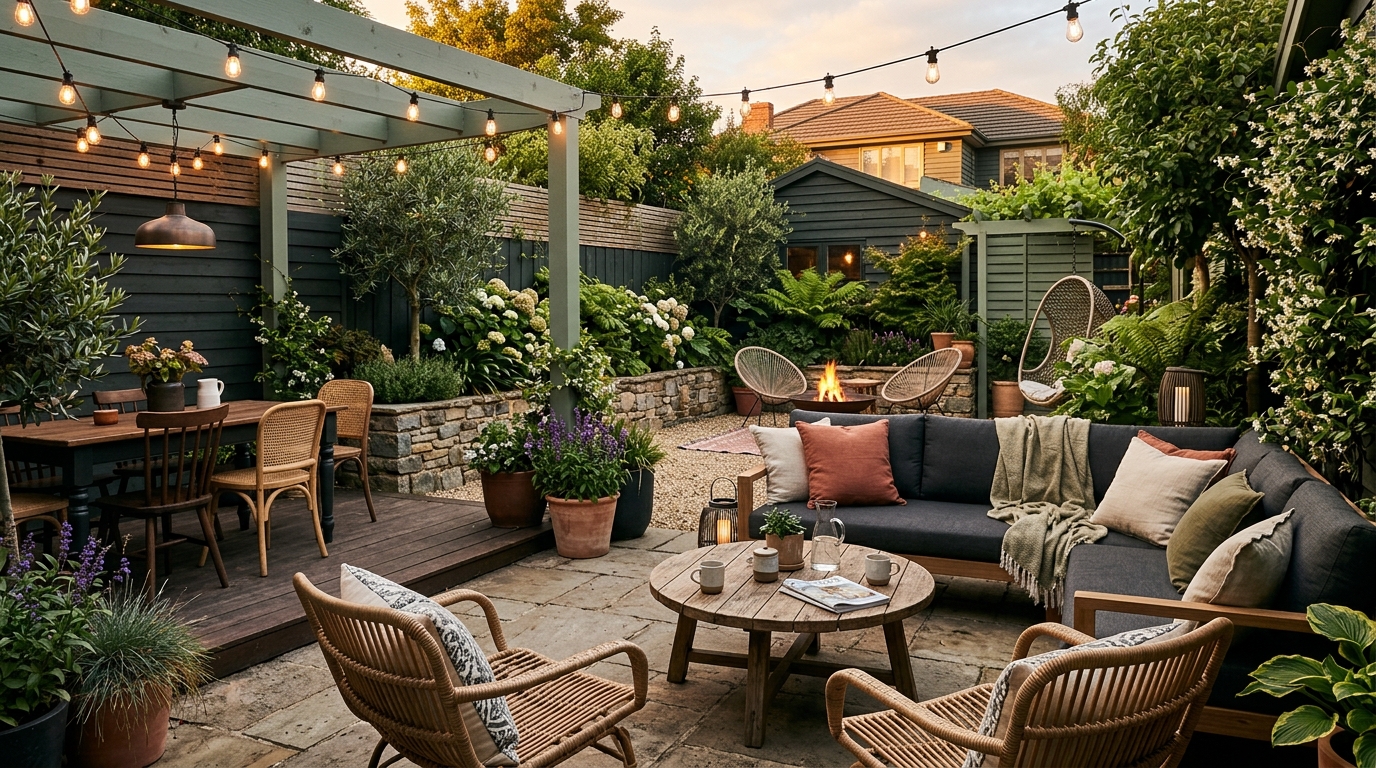
The best patios have distinct zones, just like indoor rooms. Even in a small space, you can create separation with furniture arrangement, rugs, or planters. Common zones include:
- Dining zone: Table and chairs, positioned near the kitchen or grill for easy serving.
- Lounge zone: A sofa, sectional, or pair of chairs with a side table for drinks and books.
- Cooking zone: Grill, prep surface, and storage for tools and fuel.
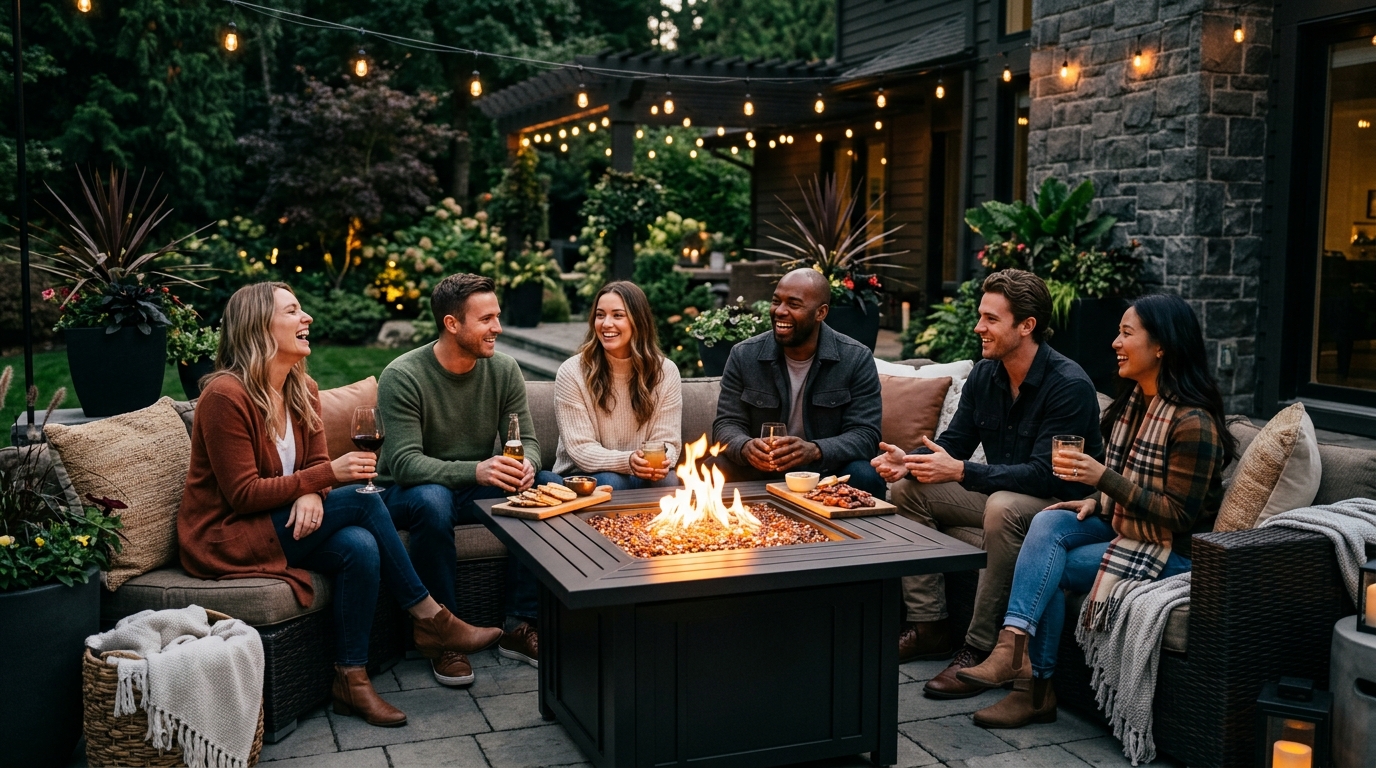
- Accent zone: A fire pit, water feature, or statement planter that draws the eye.
You don't need all four. Two well-defined zones in a small patio work better than four cramped ones.
Get the Scale Right
The most common patio design mistake is buying furniture that's too big. Measure your space first — not just the total area, but the walkway paths. You need at least 18 inches between furniture and walls, and 36 inches for walkways. A 94-inch dining table sounds generous until you realize it leaves no room to walk around it.
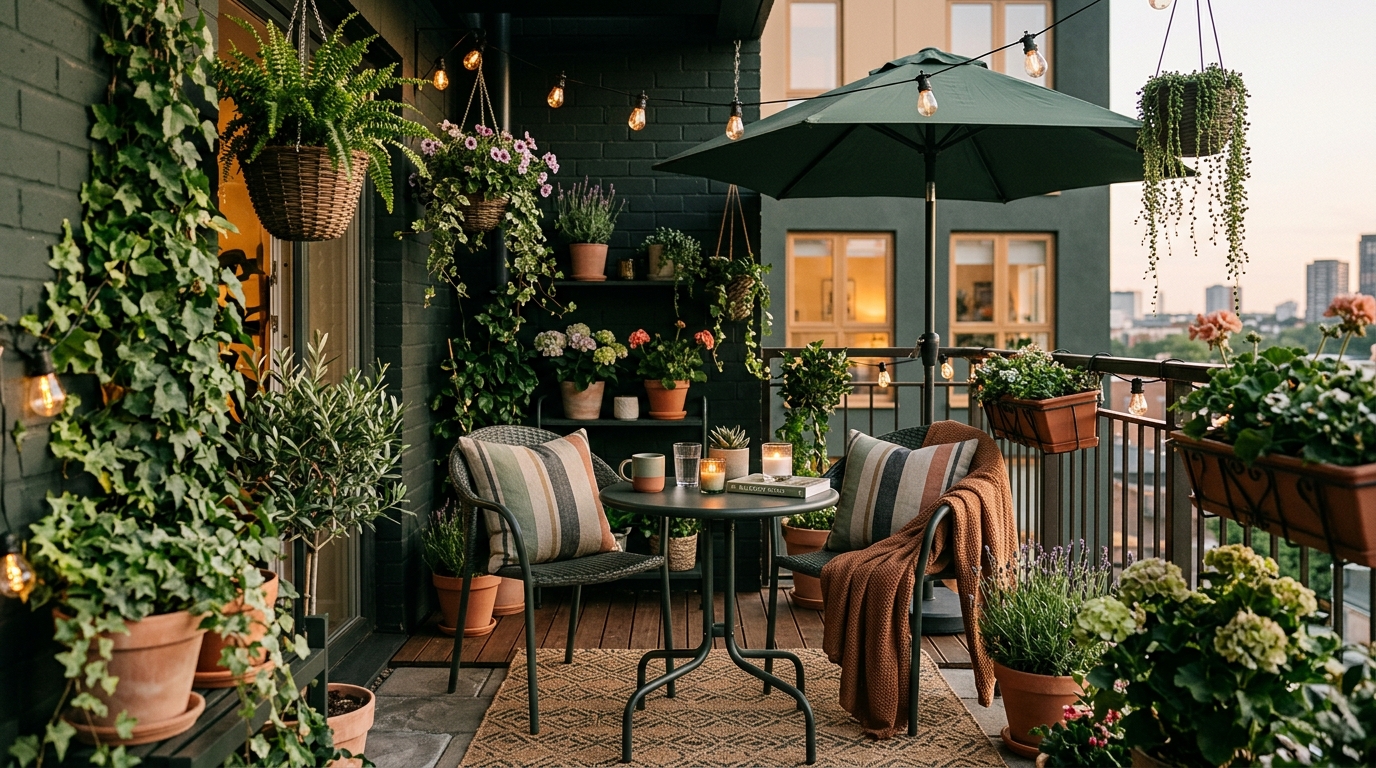
For small patios or balconies under 100 square feet, look for bistro sets, folding chairs, and wall-mounted umbrellas. For medium patios (100–300 square feet), a 5-piece dining set or a 3-seat sectional works well. Large patios (300+ square feet) can handle full 7-piece sectionals, fire pit tables, and separate dining and lounge areas.
Choose Materials for Your Climate
Outdoor furniture takes constant abuse from sun, rain, and temperature swings. The right material depends on where you live:
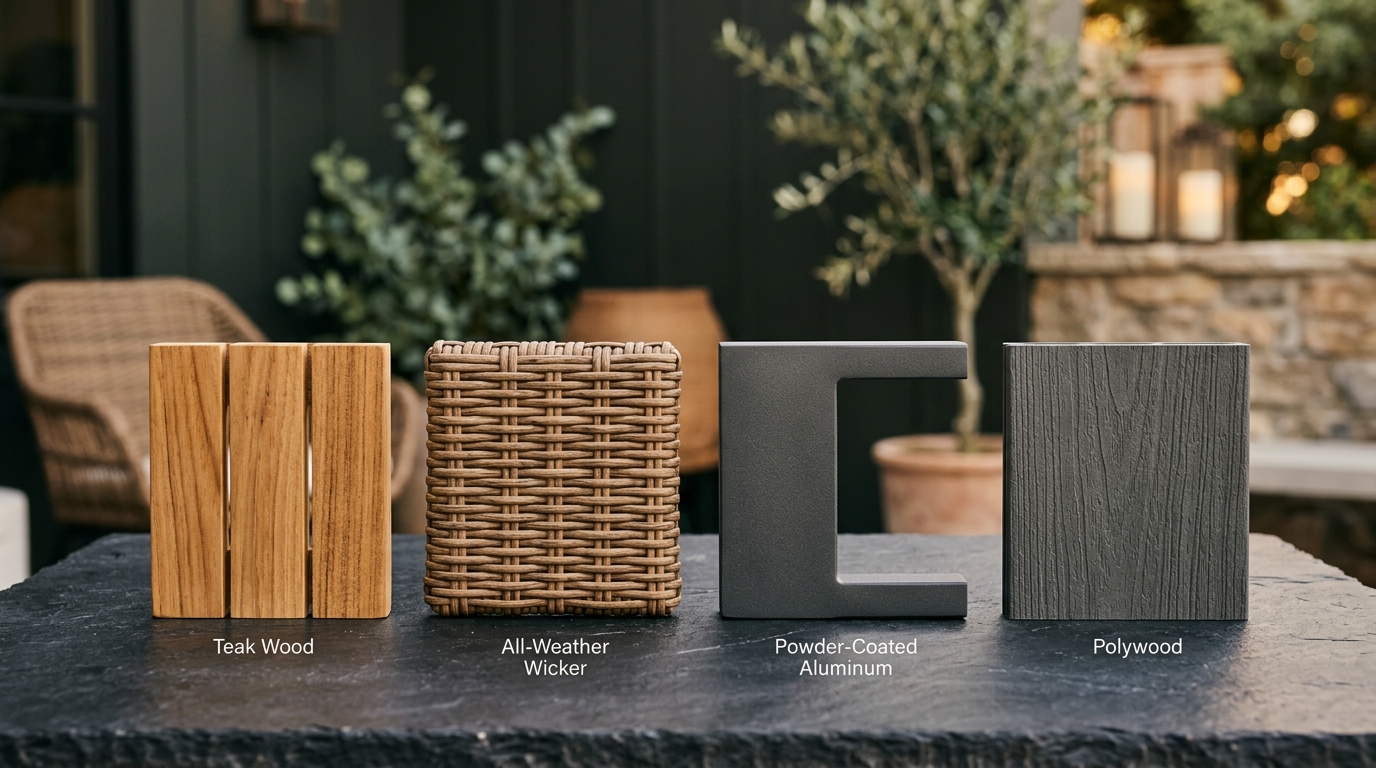
- Teak: Naturally weather-resistant, ages to a silver-gray patina. Best for coastal and humid climates. Requires occasional oiling if you want to maintain the original color.
- Aluminum: Lightweight, rust-proof, and low-maintenance. Best for rainy climates. Powder-coated finishes add durability and color options.
- All-weather wicker: Synthetic resin wicker that won't rot or fade. Best for covered or semi-covered patios. Looks natural but performs better than real rattan outdoors.
- Polywood: Recycled plastic lumber that looks like painted wood. Won't rot, crack, or fade. Best for full-sun exposure and low-maintenance setups.
- Wrought iron: Heavy and wind-resistant. Best for windy areas. Requires rust-prevention touch-ups every few years.
Layer in Shade and Lighting
A patio with no shade is unusable for half the day. Add a patio umbrella, shade sail, or pergola to create a comfortable spot during peak sun hours. For evening use, string lights, lanterns, and solar-powered path lighting extend your patio's usability well past sunset.
Don't Forget Comfort
Furniture frames matter, but cushions make the difference between a patio you use for 10 minutes and one you stay on for hours. Look for quick-dry foam inserts and solution-dyed fabric covers that resist fading and mildew. Store cushions in a deck box during harsh weather to extend their life.
Plan for the Seasons
If you live somewhere with cold winters, think about storage before you buy. Modular sectionals that disassemble, folding chairs, and stackable pieces are easier to store. A fire pit or patio heater extends your outdoor season by weeks or even months on both ends.
Designing a patio isn't about filling space — it's about creating a place you want to be. Start with how you use it, get the scale right, choose materials that fit your climate, and layer in comfort. The result is a space that earns its place in your daily life.